Walk into any home improvement store and the window treatment aisle alone can feel overwhelming. Shutters, shades, blinds, drapes — and within each category, dozens of styles, materials, and price points.
If you live in Florida however, the decision matters even more. You’re dealing with intense sun, high humidity, and a climate that puts real demands on your home. In fact, the wrong choice means fading furniture, uncomfortable rooms, and treatments that warp or yellow within a few years.
Here’s a clear, honest breakdown of your three main options — and how to know which one is right for your space.
Shutters: the long-term investment
Plantation shutters are the gold standard for Florida homes, and for good reason. They’re built to last, they add real value to your home, and also handle the demands of the Florida climate better than almost anything else.
Best for: Living rooms, bedrooms, and any room where you want a clean, finished look that works with your home’s architecture.
The upside: Shutters offer the best light control of any window treatment. You can angle the louvers to let in soft, diffused light while keeping direct sun and heat out. They’re also incredibly durable — properly installed shutters can last decades.
The consideration: They’re typically the highest upfront investment. But unlike fabric treatments, they don’t fade, warp, or go out of style — so the cost per year of use is often lower than people expect.
Shades: the versatile middle ground
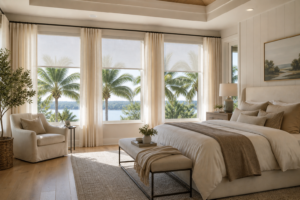
Roller shades, cellular shades, and woven wood shades all fall into this category — and there’s a lot of variety within it. The right shade can be incredibly effective and beautiful; the wrong one can look cheap or wear out quickly.
Best for: Bedrooms, home offices, and rooms where you want softer light or a specific aesthetic feel.
The upside: Shades come in an enormous range of materials, opacities, and styles. Cellular shades, in particular, provide excellent insulation — a real advantage in a Florida home where AC costs add up fast. Motorized options are also increasingly popular and practical.
The consideration: Fabric shades can degrade faster in high-humidity rooms like bathrooms or kitchens. Material and quality vary widely — this is a category where professional guidance pays off.
Blinds: the practical workhorse
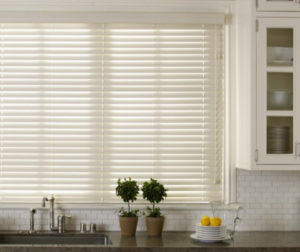
Horizontal and vertical blinds are the most familiar option for most homeowners. They’re adjustable, relatively affordable, and work in almost any room.
Best for: Rental properties, high-traffic areas, or rooms where function matters more than aesthetics.
The upside: Blinds give you precise light and privacy control, and they’re easy to clean. Faux wood blinds are a popular choice in Florida because they resist warping in humidity — unlike real wood, which can buckle over time.
The consideration: Standard aluminum or vinyl blinds can look dated in a well-designed space. If aesthetics matter to you, investing a little more in wood-look or custom options makes a significant difference.
Lastly, which one should you choose?
The honest answer: it depends on the room, your lifestyle, and what you’re trying to achieve. Many Florida homes use a combination — shutters in the main living areas, shades in the bedrooms, and faux wood blinds in utility spaces.
The most important thing is not to guess for instance, a window treatment that looks great in a showroom might not be the right fit for a west facing window in a Florida home that gets four hours of direct afternoon sun.
At Clarry Lane, we help you think through exactly this. First, we look at your specific windows, your light conditions, and how you use each room, then we recommend what will actually work, not just what’s popular right now.
Want to see your options in person?
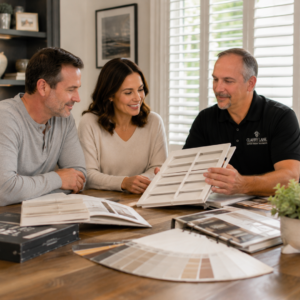
We bring samples to you. Schedule a free in-home consultation and we’ll help you find the right fit for every window in your home.
→ Schedule at clarrylane.com or call (813) 480-8638